Emergency Water Removal
Water Mitigation & Extraction in Lafayette, LA
Overview
What water mitigation means
Water mitigation is about limiting loss. Where restoration focuses on repairing and rebuilding, mitigation focuses on the immediate steps that keep water damage from getting worse: standing water removal, removing saturated materials that can't be dried, protecting unaffected areas and contents, and setting up drying equipment. For property owners looking for water mitigation in Lafayette, LA, this is the stage that happens first — often within the same visit as the initial evaluation.
Water extraction removes the bulk of the water from carpet, pad, hard floors and other surfaces. It is the fastest way to remove large amounts of water, but it can't pull out the moisture that has already soaked into drywall, framing and subfloors. That remaining moisture is addressed through structural drying.
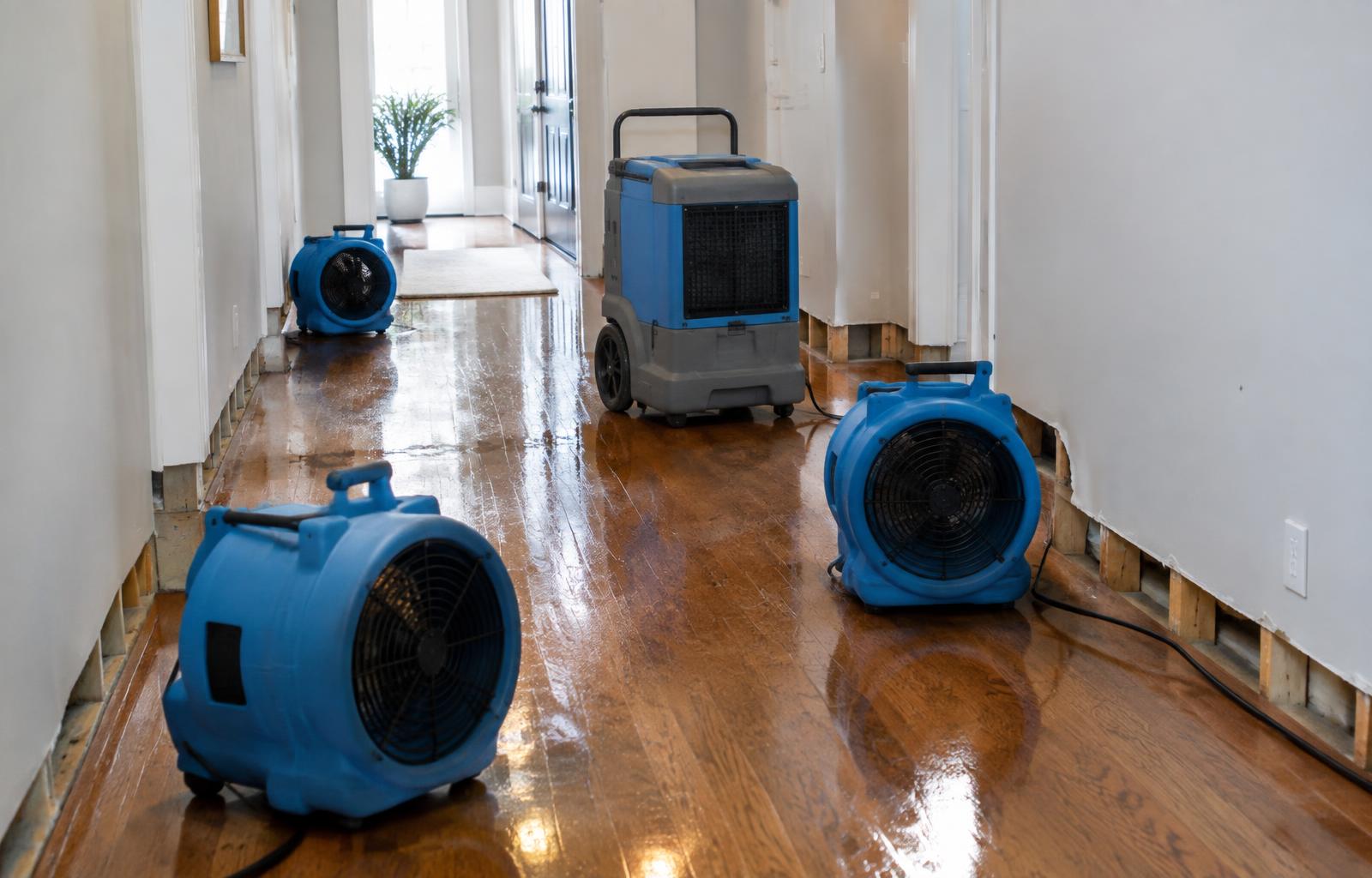
Structural drying works in two parts. Air movers increase airflow across wet surfaces, which helps moisture evaporate out of the affected materials. Dehumidification then removes that moisture from the surrounding air so it doesn't settle back into the building. Moisture detection ties it together: meter readings show where water has traveled, guide where equipment is placed and track drying progress day by day. Drying continues until the readings reach appropriate levels — not simply until surfaces look dry.
Situations that call for mitigation
- Standing water from a burst pipe or failed fitting
- Water heater or appliance failures flooding a room
- Storm water entering through doors, windows or the roof
- Sewer or drain backups into living or work spaces
- Water discovered after returning from travel
Signs you need extraction now
- Visible standing water or soaked carpet and padding
- Water spreading from one room into another
- Ceilings sagging or dripping below a leak
- Wet walls or baseboards that keep getting darker
- Humid, heavy air and a growing damp odor
Process
Our mitigation and extraction process
- 01
Source and safety
We confirm the water source is stopped and check for safety concerns such as electrical hazards or contaminated water.
- 02
Extraction
Standing water is removed from floors, carpet and other surfaces using professional extraction equipment.
- 03
Controlled removal
Materials that cannot be dried in place — often saturated pad, insulation or lower drywall — are removed to open the structure to airflow.
- 04
Drying setup
Air movers and dehumidifiers are placed based on moisture mapping to dry framing, subfloors and cavities.
- 05
Monitoring
Moisture levels are checked over the following days and equipment is adjusted until materials reach dry standards.
24/7 Emergency Restoration
Standing water? Call now — emergency service is available 24/7.
Residential and commercial mitigation
For residential water mitigation, acting early can be the difference between drying a floor in place and replacing it. Protecting furniture and belongings from wicking water is part of the job.
Commercial water mitigation often involves larger areas, multiple rooms or suites, and the need to keep unaffected areas operating. We focus on containing the affected area and drying it efficiently.
Lafayette Property Restoration provides emergency water removal and drying for homes and businesses throughout Lafayette, as well as nearby communities including Broussard, Youngsville, Scott, Carencro and Breaux Bridge.
Why the first hours matter
Water moves quickly through porous building materials. Every hour it sits, more drywall, flooring and framing absorb moisture, and the risk of secondary damage — warping, delamination, odor and mold — increases. Starting extraction and drying promptly may help limit the extent of additional damage and disruption, and gives more materials a chance to be dried rather than replaced.
Insurance & documentation
Mitigation work is frequently part of a water damage claim. We can document the conditions we find, the moisture readings taken and the drying work performed, and provide that information for your claim. Coverage decisions are made by your insurance company.
Questions & Answers
Water Mitigation & Extraction FAQs
What should I do before help arrives?
If it is safe, shut off the water source and avoid areas where water may contact electrical outlets or devices. Move small valuables off wet floors and take photos of the affected areas. Avoid using a household vacuum to remove water.
Why are you removing some materials instead of drying them?
Some materials, such as saturated carpet pad, insulation or drywall exposed to contaminated water, can't be reliably dried and cleaned. Removing them lets the structure behind them dry and reduces the chance of odor or microbial growth.
How do you know when everything is dry?
We use moisture meters to compare affected materials with dry reference readings in unaffected areas. Equipment stays in place until readings confirm the materials have reached appropriate dry levels.
What is the difference between water mitigation and water restoration?
Mitigation is the first phase: removing water, taking out materials that can't be saved and drying the structure so the damage stops spreading. Restoration follows and covers the repair and rebuild — replacing drywall, flooring, trim and finishes. This page covers the mitigation phase; most water losses involve both.
Does water extraction remove all moisture from a building?
No. Extraction removes standing water and much of the water held in carpet and pad, but moisture that has soaked into drywall, framing, subfloors and wall cavities remains. Structural drying with air movers and dehumidifiers is what removes that remaining moisture.
How long does structural drying usually take?
Drying commonly takes several days, depending on how much water was involved, how long materials were wet, the types of materials affected and conditions inside the building. Daily moisture readings show how drying is progressing, so the timeline is based on measurements rather than a fixed schedule.
Can wet flooring or drywall always be dried in place?
Not always. Drywall, flooring and insulation affected by clean water for a short time can often be dried in place. Materials that are heavily saturated, have lost their structure, have been wet for an extended period or were exposed to contaminated water usually need to be removed. The evaluation determines which applies.
Do you provide emergency water extraction in Lafayette?
Yes. Emergency restoration services, including water extraction, are available 24 hours a day, 7 days a week in Lafayette and surrounding areas. Call 337-492-0695 any time.
Can you help document mitigation work for an insurance claim?
Yes. We can record conditions on arrival, moisture readings throughout drying, materials removed and the equipment and work performed, and provide that information for your claim. Coverage decisions are made by your insurance company under your policy.
Water isn't the only emergency that leaves lasting damage behind. Fire brings its own challenges — soot, residue and persistent odor — which is why our fire and smoke damage restoration work follows a very different process.
Free Estimates