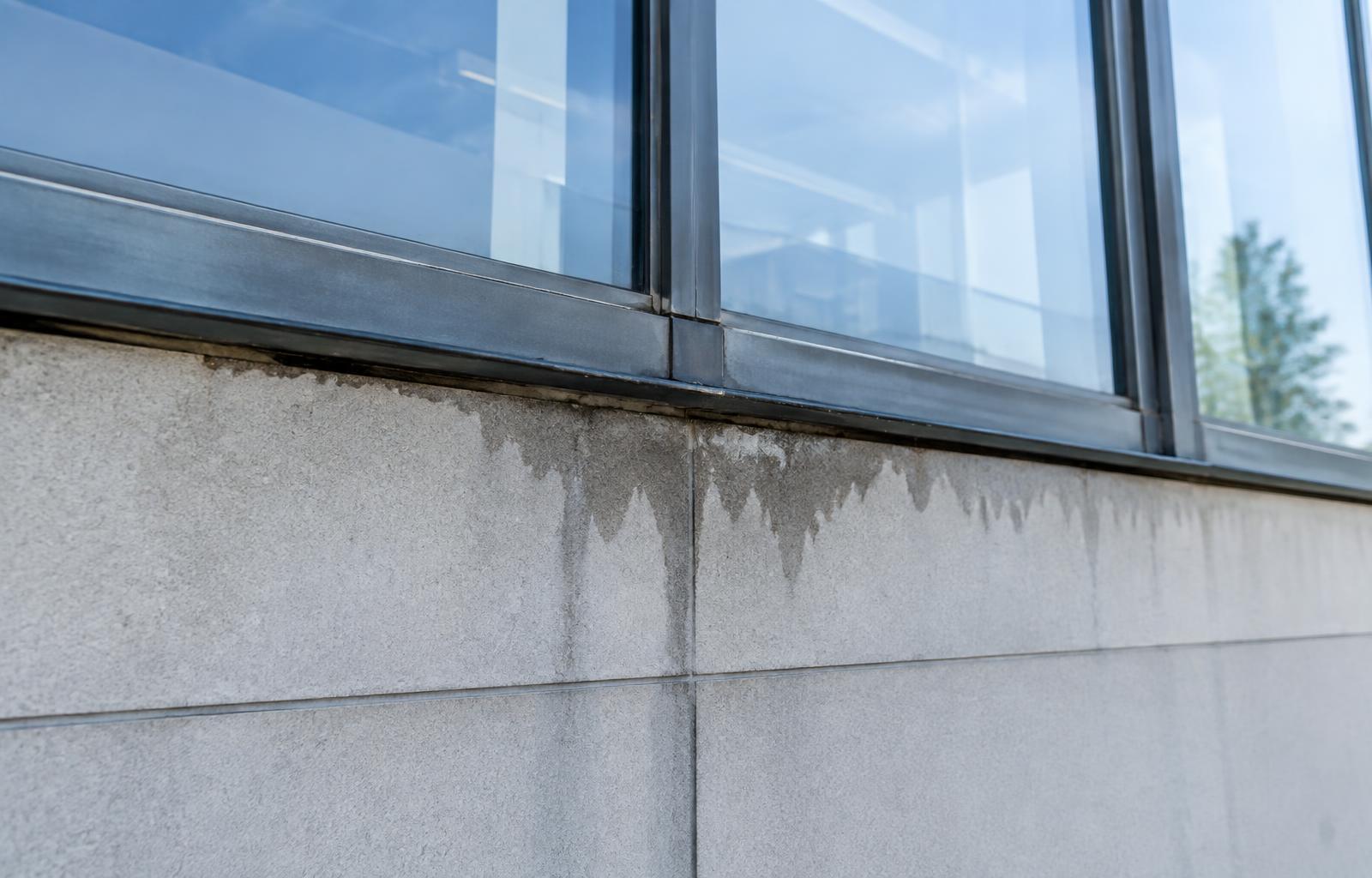
Building Envelope
Water Intrusion & Building Envelope Repair in Lafayette, LA
Overview
What is the building envelope?
The building envelope is everything that separates the inside of a building from the outside: exterior walls, windows, doors, roofing, and the sealants, flashing and joints that connect them. The roof is technically part of the envelope, but this page focuses on the rest of it — windows, doors, exterior walls, sealant joints, flashing around wall openings, wall penetrations and the transitions between building components. When any of these fail, building envelope water intrusion can occur — sometimes during every rain, sometimes only during wind-driven storms.
Water leaking through walls is often difficult to diagnose because the visible interior stain may not be directly opposite the exterior entry point. Water can travel inside wall assemblies, along framing, through insulation, across joints and behind interior finishes before it shows up as a stain, peeling paint or a musty odor somewhere else.
Proper water intrusion repair addresses both sides of the problem: the exterior location allowing water to enter, and the interior materials affected by the intrusion. Without correcting the entry point, interior repairs are likely to be damaged again.
Common sources of water intrusion
- Failed sealant at window and door perimeters
- Missing or improperly lapped flashing
- Cracks or deteriorated joints in exterior wall systems
- Gaps around wall penetrations for pipes, vents and fixtures
- Water directed toward the building by drainage problems
Signs of building envelope water intrusion
- Stains below windows or along exterior walls
- Peeling paint, bubbling or efflorescence on walls
- Damp or soft drywall near window openings
- Recurring leaks during wind-driven rain
- Musty odors in rooms along exterior walls
First Steps
What to do if water is coming through a wall or window
A few practical steps help protect your property while the source of the leak is evaluated.
- 1.
Protect the area
Move furnishings, electronics or other movable property away from active water when it's safe to do so.
- 2.
Watch for electrical hazards
Use caution if water is near outlets, light fixtures or equipment.
- 3.
Document where water appears
When it's safe, photograph the wet areas, stains and any damaged materials.
- 4.
Don't assume the stain is the source
The visible stain may be some distance from where water is actually entering.
- 5.
Note when it leaks
Pay attention to whether the leak happens only during wind-driven rain or certain storms.
- 6.
Arrange an evaluation
Have the source identified and the affected interior materials assessed.
Emergency restoration assistance is available 24 hours a day, 7 days a week. Call 337-492-0695 to talk through what you're seeing.
Process
Our water intrusion repair process
- 01
Investigation
We evaluate interior damage patterns and exterior components to identify where water is likely entering.
- 02
Exterior repair
Sealant, flashing, joints and other failed components are repaired to stop water entry.
- 03
Interior drying
Wet wall cavities and affected materials are dried or removed.
- 04
Restoration
Interior walls, trim and finishes are restored once the intrusion is corrected.
24/7 Emergency Restoration
Recurring leaks through walls or windows? Let's find the source.
Commercial and residential buildings
Residential water intrusion most often shows up around window and door openings, exterior wall penetrations and failed sealant joints. Some homes leak only during heavy or wind-driven rain, which makes the source easy to overlook until interior drywall or finishes are affected by recurring water entry. Window leak repair and sealing around doors and penetrations, paired with interior restoration, is often what's needed.
Commercial water intrusion can involve storefront glazing, exterior wall systems, window assemblies, joints between building components and wall penetrations. In multi-tenant or occupied properties, a leak through one exterior wall can affect several spaces, so we explain what we found and what repair and restoration work is needed.
Lafayette Property Restoration provides water intrusion repair and building envelope repair in Lafayette and surrounding communities, including Broussard, Youngsville, Scott, Carencro and Breaux Bridge.
Why early attention matters
Water intrusion that repeats with each storm can keep wall assemblies wet. Over time, repeated water entry can affect drywall, insulation, framing, sheathing and interior finishes, and may create conditions where mold becomes a separate concern. Identifying and correcting the source early may help limit the extent of additional moisture damage and repairs.
Insurance & documentation
We can help document visible affected areas, moisture-related conditions where relevant, exterior repairs performed and interior restoration work performed. Coverage decisions are made by the customer's insurance company under the terms of the policy.
Questions & Answers
Water Intrusion & Building Envelope Repair FAQs
What is building envelope water intrusion?
It's water entering a building through its exterior shell — walls, windows, doors, joints or flashing — rather than through plumbing. It often appears as stains, peeling paint or damp drywall near exterior openings.
Why does the leak only happen in some storms?
Wind direction and intensity affect how hard rain is driven against the building. A gap that stays dry in light rain may leak when wind pushes water against it.
Will interior repairs fix the problem?
Not on their own. If the exterior entry point isn't repaired, water will continue to enter and damage the new materials. Both sides need to be addressed.
Why can a leak appear far from where water entered?
Water can travel inside wall assemblies, along framing, through insulation and across joints before it becomes visible. The stain inside may be several feet from the actual entry point.
Can water enter through exterior walls even if the roof is not leaking?
Yes. Exterior wall water intrusion can come through cracks, deteriorated joints, failed sealant, flashing problems at openings and gaps around wall penetrations — none of which involve the roof.
What causes leaks around windows and doors?
Water intrusion around windows and doors is commonly related to failed or deteriorated perimeter sealant, missing or improperly installed flashing, or gaps where the frame meets the wall.
Can recurring water intrusion damage drywall or insulation?
Yes. Repeated wetting can stain and soften drywall, reduce the effectiveness of insulation, and affect framing and sheathing. Materials that stay damp may also create conditions for mold.
How do you determine whether a leak is coming from the roof or another part of the building envelope?
We look at where and when water appears inside, the pattern of staining and moisture in affected materials, and the nearby exterior components — windows, doors, sealant joints, flashing and penetrations, as well as the roof above — to trace the likely path.
Do you repair water intrusion in commercial buildings?
Yes. We work on commercial water intrusion involving storefront glazing, window assemblies, exterior wall joints and penetrations, along with the interior restoration that follows.
Can you help document water-intrusion damage for an insurance claim?
Yes. We can document visible affected areas, moisture-related conditions and the repair and restoration work performed. Coverage decisions are made by your insurance company under the terms of your policy.
Whether it's a single window leak or recurring water through an exterior wall, every project starts with a careful evaluation and clear communication about what we found and what restoration is needed. Learn more about Lafayette Property Restoration and how we work with property owners.
Free Estimates