Mold Remediation
Mold Remediation in Lafayette, LA
Overview
What mold remediation involves
Mold spores are naturally present in most indoor and outdoor environments, but they become a growth problem when they find moisture and a food source such as drywall, wood or the paper backing on building materials. That's why moisture-related mold so often follows a leak, a past water loss or persistent humidity.
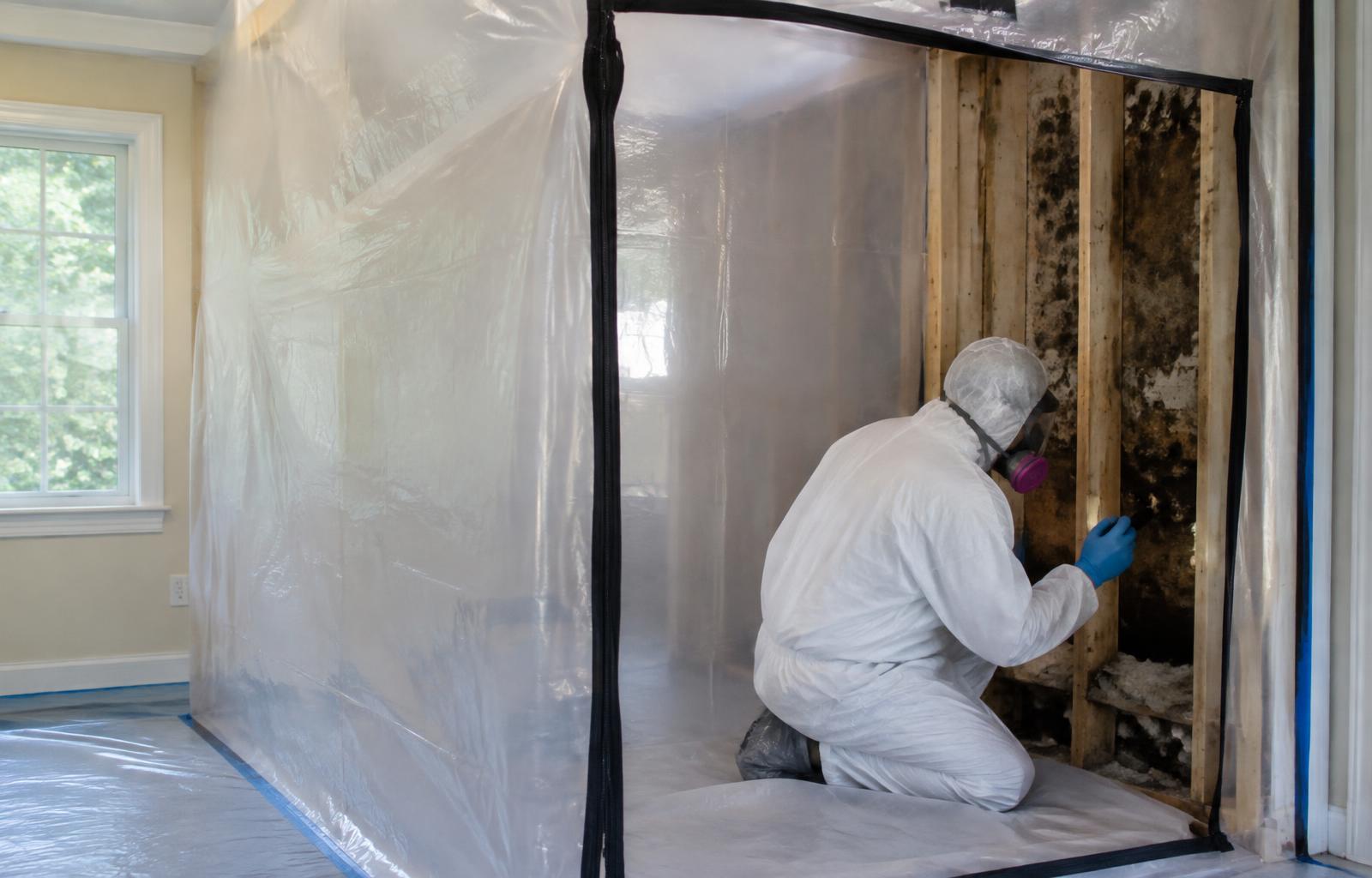
Many people search for mold removal, but effective remediation is more than wiping visible growth from a surface. Professional mold remediation focuses on the affected materials and the moisture condition that allowed the problem to develop. It starts with identifying what is supporting the growth, then limiting disturbance and spread from the work area through mold containment. Mold-damaged materials that can't reasonably be cleaned or restored are removed, materials that can remain are cleaned, and the area is dried.
Moisture source correction is what makes the work last. Reducing or correcting the underlying leak, condensation or humidity condition helps reduce the likelihood of the same problem returning. Once the area is clean and dry, removed drywall, trim and finishes can be repaired or restored as appropriate. The goal is a clean, dry, properly restored area — not a promise that mold spores will never be present again, since they exist naturally in nearly every environment.
Common causes of mold growth
- Water damage that wasn't fully dried
- Slow plumbing leaks inside walls or under sinks
- Roof leaks and water intrusion through exterior walls or windows
- Condensation on ducts, windows or poorly ventilated surfaces
- High indoor humidity in bathrooms, attics and crawlspaces
Signs you may have a mold problem
- A persistent musty or earthy odor
- Visible spotting or discoloration on walls, ceilings or furnishings
- Recurring stains around windows, vents or plumbing fixtures
- Warped or soft drywall after a past leak
- Moisture or condensation that keeps returning in one area
First Steps
What to do if you discover mold
Finding mold is common after a leak or a period of high humidity. A few calm steps help keep the situation from growing while you arrange an evaluation.
- 1.
Leave the area undisturbed
Avoid scraping, sanding or handling visible growth, which can spread it to other parts of the property.
- 2.
Don't paint over it
Paint or primer may hide staining for a while, but it doesn't address the affected material or the moisture behind it.
- 3.
Don't rely on bleach alone
Household bleach may lighten surface staining, but it doesn't correct the moisture condition or reach growth inside porous materials.
- 4.
Look for a moisture source
Check for signs of an active or past leak, condensation, or water damage nearby — stains, soft drywall or a musty odor.
- 5.
Arrange an evaluation
Have both the affected area and the moisture condition evaluated so the right scope of remediation can be recommended.
To schedule an evaluation or ask a question about what you're seeing, call 337-492-0695. Free estimates are available.
Process
Our mold remediation process
- 01
Inspection
We evaluate visible growth, likely hidden areas and, most importantly, the moisture source responsible.
- 02
Containment
The work area is isolated with containment barriers to limit disturbance and spread into unaffected spaces.
- 03
Removal and cleaning
Mold-affected porous materials are removed and remaining surfaces are cleaned.
- 04
Drying
The area is dried and the moisture issue is identified so it can be corrected.
- 05
Restoration
Removed materials are replaced and finishes restored once the area is clean and dry.
24/7 Emergency Restoration
Noticed a musty odor or visible growth? Schedule an evaluation.
Homes and commercial buildings
Residential mold remediation often involves bathrooms, kitchens and the cabinets under sinks, closets on exterior walls, areas around previous plumbing leaks, spots affected by roof or window leaks, and spaces where earlier water damage didn't fully dry. Mold after water damage is one of the most common situations we see in homes.
Commercial mold remediation may involve offices, retail spaces and multi-tenant properties. In these buildings, growth is often tied to roof leaks, building-envelope water intrusion, or recurring moisture such as condensation, and may affect multiple rooms or tenant spaces. Locating the moisture source is essential, and work is planned around occupants and operations.
Lafayette Property Restoration provides mold remediation and mold cleanup for homes and businesses throughout Lafayette and nearby communities, including Broussard, Youngsville, Scott, Carencro and Breaux Bridge.
Why you shouldn't wait
When moisture remains, affected areas can become larger over time, and more materials may end up needing removal or repair. Addressing both the mold and the moisture condition early can help keep the scope of work smaller. Reducing or correcting the underlying moisture condition helps reduce the likelihood of the same problem returning.
Questions & Answers
Mold Remediation FAQs
Can I just clean mold with bleach?
Surface cleaning may lighten visible staining on non-porous surfaces, but it doesn't address growth inside porous materials or the moisture problem that caused it. Larger areas of growth should be handled with containment and proper removal.
Will mold come back after remediation?
Mold can return if the moisture source isn't corrected. That's why remediation includes identifying the leak, intrusion or humidity issue so it can be fixed.
Do I need to leave my home during mold remediation?
It depends on the size and location of the affected area. Containment is designed to isolate the work area, and we'll discuss whether any rooms should be avoided during the work.
What is the difference between mold removal and mold remediation?
"Mold removal" usually describes taking visible growth off a surface. Remediation is broader: it addresses the affected materials, limits spread from the work area, removes what can't reasonably be cleaned, cleans what can remain, dries the area and focuses on the moisture condition that allowed the growth. Because mold spores exist naturally almost everywhere, the goal is correcting the problem area — not eliminating every spore.
What should I do if I find mold after water damage?
Avoid disturbing the growth and note where the water came from. Mold after water damage usually means some materials didn't fully dry, so both the affected area and the remaining moisture should be evaluated before repairs or refinishing.
Do you need to find the moisture source before mold remediation?
Identifying the moisture source is a key part of the process. Remediating growth without addressing the leak, condensation or humidity condition behind it leaves the conditions for the same problem in place.
Can mold-damaged drywall be cleaned, or does it need to be removed?
Drywall is porous, so growth often extends into the paper facing and core. In many cases mold-damaged drywall is removed and replaced rather than cleaned. Non-porous surfaces nearby can usually be cleaned. The evaluation determines which materials apply.
Do you provide mold remediation for commercial buildings?
Yes. We provide commercial mold remediation for offices, retail spaces and multi-tenant properties, with work planned around occupants, access and the moisture source involved.
How do I know if a musty odor could be related to hidden moisture or mold?
A persistent musty or earthy odor — especially near exterior walls, under sinks, in closets or after a past leak — can indicate moisture behind surfaces. Stains, soft drywall or recurring condensation nearby are additional clues. An evaluation can help locate the moisture involved.
Can you tell what type of mold it is by looking at it?
No. Color and appearance alone don't determine the species of mold or its significance, so we don't label growth based on how it looks. Our focus is on the affected materials, the moisture condition and the remediation needed.
Do you provide mold remediation in Lafayette and surrounding areas?
Yes. We serve Lafayette and nearby communities. Call 337-492-0695 to schedule an evaluation or request a free estimate.
Storm-related water intrusion can leave lingering moisture behind when the damage isn't dried or repaired — one of the more common paths to mold. When wind and heavy rain affect your property, our storm damage and emergency repair services help address the damage before it develops into larger issues.
Free Estimates