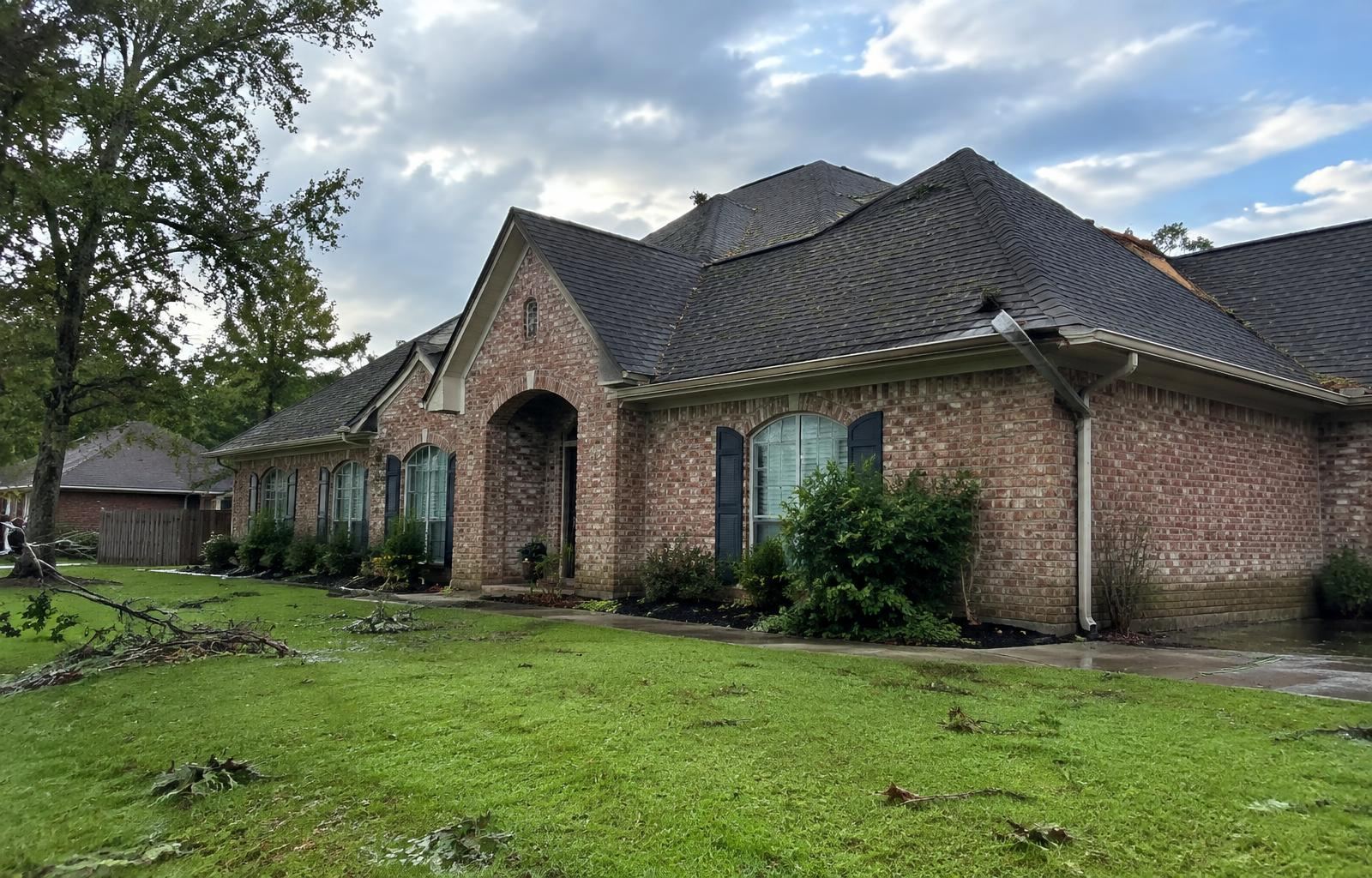
Storm Damage
Storm Damage Restoration & Emergency Repairs in Lafayette, LA
Overview
How storms damage property
Storm damage is rarely a single problem. High winds can loosen roofing, gutters and exterior components; heavy, wind-driven rain can be pushed through gaps around windows, doors and wall penetrations; and rising water can enter at ground level. Often the most significant damage is not what's visible from the yard but the storm-related water damage that made its way inside walls, ceilings and floors.
Water intrusion after a storm can come from several directions: damaged roof areas or roof penetrations, failed flashing, windows and doors, openings in exterior walls, joints and penetrations in the building envelope, and ground-level entry where water rises or pools against the structure. Water can also travel along framing, roof decking or inside wall cavities before it shows up, so the stain on a ceiling or the damp spot on a floor isn't always where the water actually entered.
Storm damage restoration focuses on finding and addressing the effects of the storm on the building — evaluating where water entered, removing water and drying affected interior areas where needed, cleaning, and completing storm damage repair within the scope of the restoration. Because every storm and every building is different, we start with a thorough evaluation and explain what we find before recommending a plan.
Common types of storm damage
- Wind-driven rain entering around windows, doors and siding
- Water entering through damaged roofing or flashing
- Rising water and ground-level flooding
- Damaged gutters and downspouts directing water toward the structure
- Interior water damage to ceilings, walls and flooring
What to check after a storm
- New water stains on ceilings or upper walls
- Damp carpet or flooring near exterior walls and doors
- Visible damage to roofing, gutters or exterior trim
- Water in attics, crawlspaces or utility areas
- Musty odor developing in the days after the storm
First Steps
What to do after storm damage
Once the weather has passed, a few practical steps help keep everyone safe and make it easier to understand what the storm affected.
- 1.
Put safety first
Avoid entering areas with visible structural damage, electrical concerns or other serious hazards.
- 2.
Stay clear of power lines
Keep away from downed power lines and any water that may be in contact with electrical equipment.
- 3.
Stay off the roof
Don't climb onto a damaged or wet roof to inspect it.
- 4.
Check inside for water entry
Look for ceiling stains, wet flooring, damp drywall, or water near windows and doors.
- 5.
Document visible damage
When it's safe, take photos of exterior and interior damage for your records and any insurance claim.
- 6.
Arrange an evaluation
If storm water entered the property or you suspect hidden damage, have it evaluated so drying and repairs can be planned.
Emergency restoration assistance is available 24 hours a day, 7 days a week. Call 337-492-0695 to talk through what you're seeing.
Process
Our storm damage process
- 01
Evaluation
We review the property for storm-related damage, with particular attention to where water may have entered the structure.
- 02
Water response
Interior water is removed and drying begins to limit secondary damage.
- 03
Cleaning
Affected areas are cleaned, especially where storm or flood water was involved.
- 04
Repairs
Damaged interior materials and affected components are repaired to restore the property.
24/7 Emergency Restoration
Storm damage at your property? Our emergency line is open 24/7.
Homes and commercial properties
Residential storm damage often shows up as roof-related water entry, stained or damaged ceilings and walls, wet flooring, moisture in attics or wall cavities, and wind-driven rain damage around windows and doors. For homeowners, the days after a storm can be stressful — a clear evaluation helps you understand what was affected inside the home and what needs to happen next.
Commercial storm damage can involve roof leaks, larger affected interior areas, and water entering through walls, windows or other building-envelope components. In occupied and multi-tenant buildings, storm water can affect several suites, common areas and building systems at once. We help owners and property managers assess the impact across the property and plan emergency property restoration around access and normal operations where possible.
Lafayette Property Restoration responds to storm damage at homes and businesses throughout Lafayette, as well as nearby communities such as Broussard, Youngsville, Scott, Carencro and Breaux Bridge.
Why prompt evaluation matters
Storm water rarely stays on the surface. It can move into drywall, insulation, flooring, subfloors and wall cavities, where it may not be visible and where materials can continue to deteriorate while they stay wet. Lingering moisture can also create conditions for mold. Evaluating and drying affected materials promptly may help limit additional damage and keep the scope of repairs more manageable.
Insurance & documentation
Storm damage often involves an insurance claim. We can help document visible affected areas, moisture-related conditions where relevant, and the restoration work performed, and provide information commonly needed during the claim process. Coverage decisions are made by your insurance company under your policy.
Questions & Answers
Storm Damage & Emergency Repairs FAQs
What should I do right after storm damage?
Make sure everyone is safe and avoid damaged areas or anything near downed power lines. Take photos of the damage, and if water is entering the building, call for help promptly so interior drying can begin.
Can storm water cause hidden damage?
Yes. Wind-driven rain and roof leaks can wet insulation, framing and drywall without obvious signs at first. Stains and odors may appear days later.
Do you work on both homes and businesses after storms?
Yes. We help with storm-related property damage for residential and commercial properties in Lafayette and surrounding areas.
What are signs of a roof leak after a storm?
New or spreading ceiling stains, drips during later rain, damp insulation or wood in the attic, peeling paint near the top of walls, and musty odors in upper rooms can all point to a roof leak after a storm. Because water can travel before it appears, the stain may not be directly below the source.
Can wind-driven rain enter around windows and doors?
Yes. Strong wind can push rain into small gaps around window and door frames, sealant joints and wall openings that stay dry in normal rain. Look for damp drywall, stained trim or wet flooring below these openings after a storm.
Can storm-related water damage lead to mold?
It can. When storm water soaks into drywall, insulation, flooring or wall cavities and isn't dried, the lingering moisture can create conditions for mold growth. Prompt evaluation and drying help reduce that risk.
How do you determine where storm water entered a building?
We look at where water appeared inside, the pattern of staining and moisture in the affected materials, and the exterior components nearby — roofing, flashing, windows, doors and wall openings — to trace the likely path. The entry point and the visible damage are not always in the same place.
Can you help document storm damage for an insurance claim?
Yes. We can document visible affected areas, moisture-related conditions and the restoration work performed, and provide information commonly requested during the claim process. Coverage decisions are made by your insurance company under your policy.
Do you provide 24/7 emergency storm restoration in Lafayette?
Yes. Emergency restoration services are available 24 hours a day, 7 days a week in Lafayette and surrounding areas. Call 337-492-0695 any time.
Severe weather can reveal or worsen roof leaks — especially on commercial buildings with large flat or low-slope roofs. If water is coming through the ceiling of your business after a storm, see how we approach commercial roof leak repair and the interior damage that comes with it.
Free Estimates