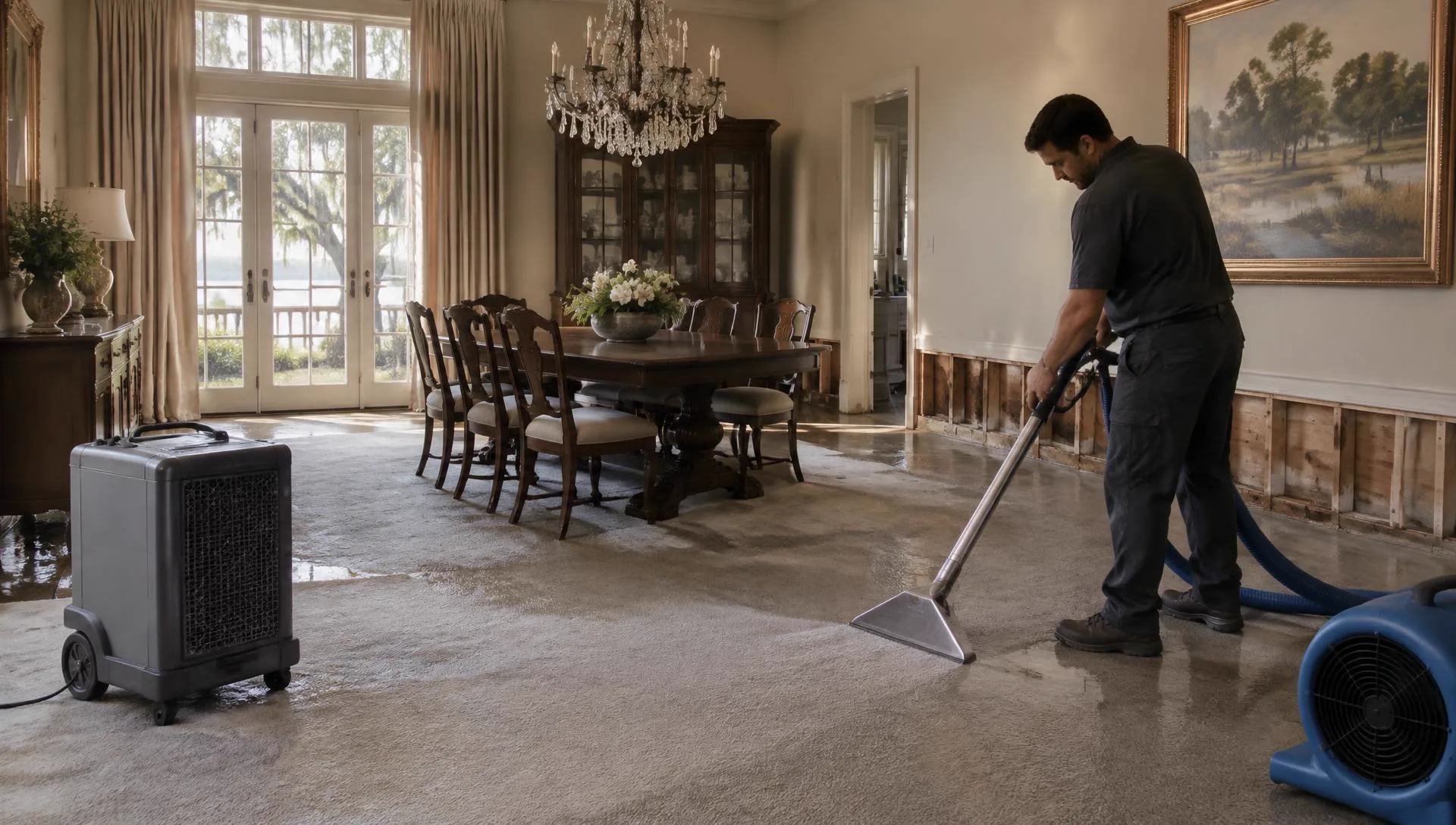
Water Damage Restoration
Water Damage Restoration in Lafayette, LA
Overview
What water damage restoration involves
Water damage restoration is the full process of returning a property to its pre-loss condition after water has entered where it doesn't belong. It begins with stopping the source and removing standing water, but the larger part of the job is everything that follows: finding where moisture has traveled, drying the structure thoroughly, cleaning and sanitizing affected materials, and then completing the water damage repair work — replacing or rebuilding the drywall, insulation, baseboards, flooring, cabinetry and trim that can't be saved.
Water rarely stays where it lands. It wicks up drywall, travels under flooring, settles into wall cavities and soaks into subfloors. Surfaces can feel dry within a day while the materials behind them remain saturated. That is why restoration is guided by moisture detection — meter readings taken throughout the affected areas — rather than appearance. Structural drying with air movers and dehumidification then continues until those readings confirm the materials are dry, not simply until surfaces look better.
Whether the source is a burst pipe, a leaking appliance, a slow plumbing leak or roof-related water intrusion during a heavy Louisiana storm, the goal is the same: a property that is genuinely dry, clean and rebuilt — not one that only looks finished. For flood damage cleanup or other contaminated water, additional material removal and sanitizing are part of the work.
Common causes of water damage
- Burst or leaking supply lines under sinks, behind toilets and at refrigerators
- Water heater failures and leaking washing machine hoses
- Overflowing tubs, showers and clogged drains
- Heavy rain, flood water and storm-related intrusion
- Roof leaks and failed flashing that reach ceilings and walls
- Slow plumbing leaks hidden inside walls or under cabinets
Warning signs to watch for
- Stains or discoloration on ceilings and walls
- Swollen baseboards, bubbling paint or peeling wallpaper
- Cupping, buckling or soft spots in wood and laminate floors
- Persistent musty odors in a room or closet
- Unexplained increases in your water bill
First Steps
What to do when you discover water damage
A few calm, practical steps in the first minutes can limit how far water spreads and make the restoration simpler.
- 1.
Stop the source, if it's safe
Close the fixture's shut-off valve or the main water supply for a plumbing leak. If water is coming from outside, focus on safety rather than the source.
- 2.
Keep clear of electrical hazards
Don't walk through standing water near outlets, cords or appliances. If water has reached electrical components, turn off power only if you can do so from a dry location.
- 3.
Move valuables when it's safe
Lift rugs, electronics, documents and small furniture off wet floors, and place foil or blocks under furniture legs to prevent staining.
- 4.
Don't trust how dry it looks
Drywall, flooring and subfloors can stay wet inside long after surfaces feel dry. Hidden moisture is what leads to warping, odors and mold later.
- 5.
Call for an evaluation
Take a few photos for your records, then have a restoration professional measure where moisture has traveled and recommend next steps.
Emergency restoration is available 24 hours a day, 7 days a week. Call 337-492-0695 and we'll talk through what you're seeing and what to do next.
Process
How our water damage restoration process works
- 01
Evaluation
We identify the water source, the category of water involved and how far moisture has spread using meters and a room-by-room inspection.
- 02
Water removal
Standing water is extracted and wet materials that cannot be dried in place are removed so the structure can begin drying.
- 03
Structural drying
Air movers and dehumidifiers are positioned to dry framing, subfloors and wall cavities, with moisture levels checked until materials reach dry standards.
- 04
Cleaning
Affected areas are cleaned and treated as needed to address contamination and reduce the risk of odor and microbial growth.
- 05
Repair and rebuild
Drywall, insulation, flooring, trim and finishes are restored so the space is ready to live or work in again.
24/7 Emergency Restoration
Water in your home or building? We're available 24/7.
Homes and commercial properties
In homes, water damage most often starts in kitchens, bathrooms and laundry rooms, then spreads into adjacent rooms and lower floors. We keep homeowners informed about what is being removed, why, and what the rebuild will look like.
For offices, retail spaces and other commercial buildings, commercial water damage can affect tenants, inventory and daily operations. We plan the work with access, scheduling and affected areas in mind so the business can recover as smoothly as possible.
Based on Johnston Street, Lafayette Property Restoration works with homeowners, businesses and property managers throughout Lafayette, as well as nearby communities such as Broussard, Youngsville, Scott, Carencro and Breaux Bridge.
Why timely evaluation matters
The longer materials stay wet, the more they absorb, the weaker they become and the more likely odors and mold are to develop. Drywall and insulation that could have been dried may need replacement after extended exposure. An early evaluation helps limit how much of the property is affected and how much repair is ultimately required.
Insurance & documentation
Water losses are often part of an insurance claim. We can help document the damage and the restoration work performed — including photos, moisture readings and scope of work — and provide information commonly requested during the claim process. Coverage decisions are always made by your insurance company.
Questions & Answers
Water Damage Restoration FAQs
Can water-damaged drywall be saved?
Sometimes. Drywall affected by clean water for a short period can often be dried in place. Drywall that has been wet for an extended time, has lost structural integrity, or was exposed to contaminated water usually needs to be removed and replaced. Moisture readings and an inspection determine which applies.
How long does water damage restoration take?
It depends on how much of the structure is wet and what materials are involved. Drying commonly takes several days and is confirmed with moisture readings. Repair and rebuild time varies with the scope of materials that need replacement.
Do you handle the repairs after drying?
Yes. Restoration includes repairing and rebuilding affected areas — drywall, insulation, flooring, trim and finishes — so the property is returned to a usable condition.
How quickly should water damage be addressed?
As soon as practical. Porous materials such as drywall, carpet pad, insulation and wood absorb more water the longer they stay wet, which can turn materials that could have been dried into materials that need replacement. Prompt drying also reduces the chance of odors and mold.
How do professionals know whether moisture is still inside walls or flooring?
Moisture meters compare readings in affected materials with dry reference readings from unaffected areas of the same property. Readings are taken throughout drying, and equipment stays in place until materials reach appropriate dry levels.
What is the difference between water extraction and structural drying?
Extraction removes standing and absorbed water from floors, carpet and other surfaces. Structural drying follows, using air movers and dehumidifiers to pull the remaining moisture out of framing, subfloors and wall cavities. Extraction is fast; drying usually takes several days.
Can water damage lead to mold growth?
Yes. Wet building materials give mold the moisture and food source it needs, particularly inside walls, under flooring and above ceilings. Thorough drying verified with moisture readings is the most effective way to reduce that risk.
Can you help document water damage for an insurance claim?
Yes. We can document the damage and the restoration work performed — including photos, moisture readings and a scope of work — and provide information commonly requested during the claim process. Coverage decisions are made by your insurance company under your policy.
Do you provide emergency water damage restoration in Lafayette?
Yes. Emergency restoration services are available 24 hours a day, 7 days a week. Our regular office hours are 7:00 AM–7:00 PM Monday through Friday and 7:00 AM–5:00 PM Saturday and Sunday.
Is flood water handled differently than a pipe leak?
Yes. Flood water and other contaminated water require more extensive removal of porous materials and additional cleaning compared with a clean supply-line leak. We identify the type of water involved during the evaluation.
When water is still standing or actively spreading, the first priority is getting it out of the structure quickly. Learn how our water mitigation and extraction services limit damage in the first critical hours.
Free Estimates