Fire & Smoke Restoration
Fire & Smoke Damage Restoration in Lafayette, LA
Overview
Understanding fire and smoke damage
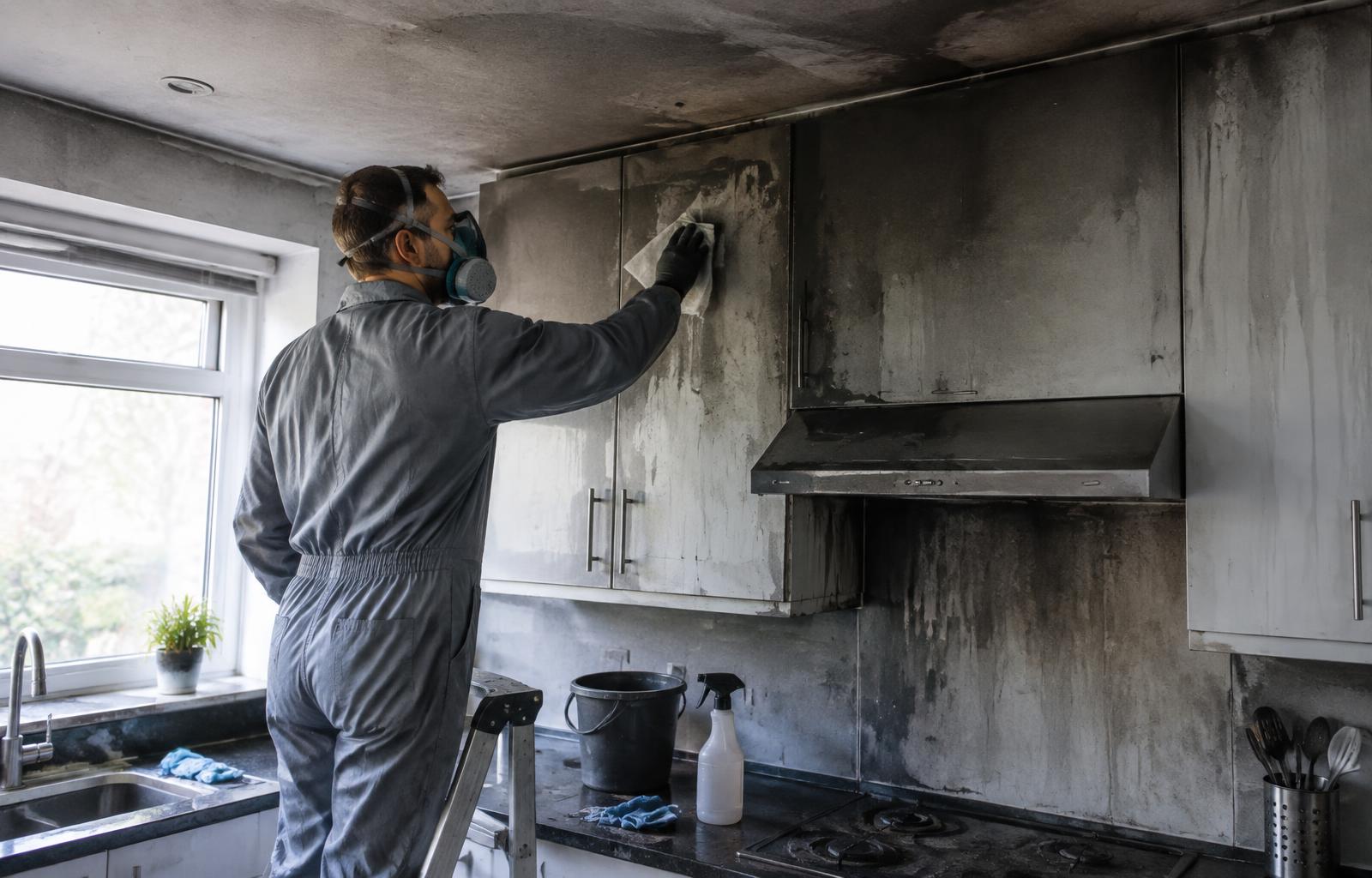
Fire damage restoration covers the burned and charred areas of a property, but smoke damage often reaches well beyond the room where the fire started. Smoke carries fine particles of soot through doorways, hallways and openings, and that smoke residue can settle on walls and ceilings, cabinetry, light fixtures, vents and surfaces around HVAC registers, furnishings and other exposed materials — sometimes in rooms that show no other sign of the fire.
Not all residue is the same. Depending on what burned, soot can be dry and powdery or oily and prone to smearing, and some residues can discolor surfaces the longer they remain. Painted drywall, finished wood, cabinetry, fabrics and hard surfaces each respond differently, so soot cleanup and smoke cleanup are matched to both the type of residue and the material it's on. A careful assessment helps separate what can be cleaned from what must be replaced.
Fire restoration also includes smoke odor removal. Lasting odor control comes from cleaning or removing the materials and residue that hold the odor, then treating the space appropriately — not from covering the smell with fragrance. And because firefighting introduces significant water, many fire losses also involve fire-related water damage that needs to be dried before repairs begin.
Common sources of fire and smoke damage
- Kitchen and cooking fires
- Electrical fires in wiring, outlets or appliances
- Heating equipment, space heaters and dryer vents
- Candles, smoking materials and fireplace issues
- Smoke migration from a fire in an adjoining unit or suite
Signs of smoke damage beyond the fire area
- Gray or black film on walls, ceilings and window sills
- Darkened outlines around vents, outlets and light fixtures
- Yellowing on painted surfaces or plastics
- A lingering smoke odor that returns after airing out
- Soot on contents, cabinet interiors and closets
First Steps
What to do after a fire
Once everyone is safe, a few practical steps can protect the property and make the restoration process clearer.
- 1.
Wait until it's safe to re-enter
Don't go back inside until the fire department or other authorities confirm the property is safe.
- 2.
Leave soot-covered surfaces alone
Avoid touching, wiping or sitting on surfaces with soot or smoke residue, which can spread it or push it further into materials.
- 3.
Hold off on aggressive cleaning
Scrubbing or using household cleaners on smoke-damaged materials before they are evaluated can make residue harder to remove.
- 4.
Keep firefighting water in mind
Water used to put out the fire can soak into flooring, walls and ceilings and needs to be dried along with the smoke cleanup.
- 5.
Document what you can safely see
Photos of visible damage are useful for your records and your insurance claim.
When you're ready, a restoration professional can evaluate the fire, smoke, soot, odor and any related water damage. Call 337-492-0695 — emergency restoration is available 24 hours a day, 7 days a week.
Process
How fire and smoke restoration works
- 01
Assessment
We evaluate the burned areas, how far smoke traveled, the type of residue present and any water damage from firefighting.
- 02
Removal
Charred and unsalvageable materials are removed and the area is prepared for cleaning.
- 03
Soot and residue cleaning
Surfaces are cleaned with methods matched to the residue type, working from heavily affected areas outward.
- 04
Odor treatment
Odor is addressed at the source by cleaning affected materials and using deodorization methods suited to the space.
- 05
Repair
Drywall, finishes and other components are repaired or replaced to restore the property.
24/7 Emergency Restoration
Recovering from a fire? Let's talk through the next steps.
Residential and commercial fire losses
Residential fire damage restoration starts with understanding which parts of the home were actually affected. A kitchen fire may leave heavy residue in the kitchen and lighter smoke film in nearby living areas, hallways or bedrooms, while other rooms remain largely unaffected. We explain what can be cleaned, what needs replacement and what to expect, so decisions feel manageable rather than overwhelming.
Commercial fire damage restoration has its own considerations. Smoke can travel through shared ceilings, corridors and adjoining suites into work areas that saw no flame. We document affected spaces, help owners and property managers understand the scope, and plan the work around access, occupants and operations to limit business interruption where possible.
Lafayette Property Restoration provides fire and smoke damage cleanup for homes and businesses throughout Lafayette, as well as nearby communities such as Broussard, Youngsville, Scott, Carencro and Breaux Bridge.
Why prompt cleanup matters
Soot and smoke residue can continue to affect surfaces after the fire is out. Some residues become harder to remove and more likely to cause permanent discoloration the longer they remain. Water from firefighting also needs to be addressed quickly to avoid secondary water damage and odor.
Insurance & documentation
Fire losses typically involve detailed claim documentation. We can help document affected areas, materials removed and the restoration work completed, and provide information your insurance company commonly requests. Coverage decisions are made by your insurance company under your policy.
Questions & Answers
Fire & Smoke Damage Restoration FAQs
Can smoke odor be completely removed?
In many cases, yes — when odor is addressed at its source. That means cleaning or removing smoke-affected materials, cleaning surfaces and contents, and using appropriate deodorization. Masking odor with fragrance does not solve the problem.
Should I clean soot myself?
It's best to avoid wiping soot yourself. Some residues smear easily and can be pushed deeper into porous surfaces, making professional cleaning more difficult.
Does a small kitchen fire really need professional restoration?
Even small fires can spread smoke residue and odor throughout a home, including inside cabinets and HVAC ductwork. An evaluation helps determine how far the residue traveled.
What should I do immediately after a fire?
Make sure everyone is safe and wait for authorities to say the property can be entered. Avoid disturbing soot, hold off on cleaning, photograph visible damage when it's safe, and contact a restoration professional to evaluate smoke, soot, odor and water damage.
How far can smoke damage travel from the fire?
Smoke moves with air currents, so residue can travel through hallways, doorways, shared ceilings and openings around vents into rooms well away from the fire. How far it spreads depends on the size of the fire, what burned and the layout of the building.
What is involved in soot cleanup?
Soot cleanup starts with identifying the type of residue and the surfaces it's on. Affected surfaces are then cleaned using approaches suited to that residue and material, generally working from the most heavily affected areas outward. Some porous materials may need to be removed rather than cleaned.
Can firefighting water cause additional property damage?
Yes. The water used to extinguish a fire can saturate flooring, drywall, insulation and contents. If it isn't dried, it can lead to further damage, odor and mold, so drying is often part of fire restoration.
How do you determine what can be cleaned versus what must be replaced?
It depends on the material, the type and amount of residue, any heat or water damage, and whether odor can be removed from it. Hard, non-porous surfaces can often be cleaned, while heavily affected porous materials may need replacement. We explain these decisions as part of the evaluation.
Do you handle residential and commercial fire damage?
Yes. We work on fire and smoke damage in homes and commercial properties, including offices, retail and multi-tenant buildings in Lafayette and surrounding areas.
Can you help document fire and smoke damage for an insurance claim?
Yes. We can document affected areas, materials removed and the restoration work performed, and provide information commonly requested during the claim process. Coverage decisions are made by your insurance company.
Do you provide emergency fire and smoke restoration in Lafayette?
Yes. Emergency restoration services are available 24 hours a day, 7 days a week. Call 337-492-0695 any time.
Firefighting water and other lingering moisture can stay trapped in walls and ceilings after a fire, creating conditions where mold can become a separate concern. If you've noticed a musty odor or visible growth, our mold remediation services address both the mold and the moisture causing it.
Free Estimates